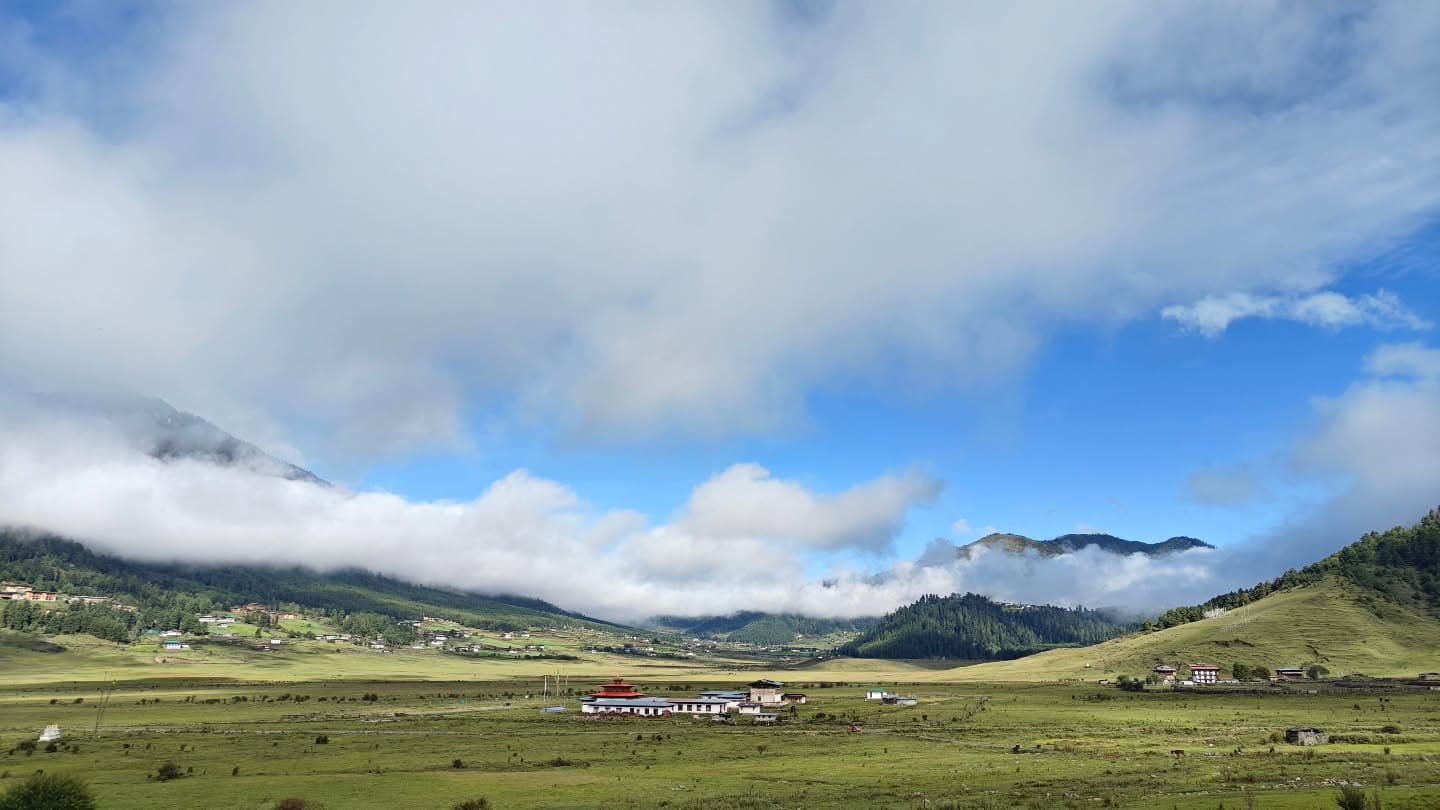
Welcome to the Kingdom of
Land of the
Thunder Dragon
Where Gross National Happiness reigns supreme
Begin Your Journey →འབྲུག་ཡུལ — Druk Yul
The Last Shangri-La
Nestled high in the Eastern Himalayas, Bhutan is a kingdom where ancient traditions breathe alongside untouched forests, where dzongs stand sentinel over misty valleys, and where happiness is measured not in wealth, but in well-being.
Sacred Places
Where Ancient Spirits Dwell
From the cliffside monasteries to the pristine valleys, every corner of Bhutan tells a story written over centuries of devotion and wonder.

Tiger’s Nest Monastery
Paro Taktsang — perched impossibly on a 3,120m cliff face, this sacred monastery is Bhutan’s most iconic landmark and a pilgrimage of profound spiritual significance.

Punakha Valley
Where the Mo Chhu and Pho Chhu rivers meet at the stunning Punakha Dzong — Bhutan’s most beautiful fortress and the winter seat of the monastic body.

Bumthang Valley
The spiritual heartland of Bhutan, home to the ancient Jambay Lhakhang temple, sacred burning lakes, and centuries-old monasteries set among pine-forested hills.
Immersive Journeys
Experiences That Transform
Bhutan offers not mere tourism but transformative encounters — with nature, with culture, and with the self.
Festival Celebrations
Witness the vibrant Tshechu festivals where masked dancers perform sacred dances, accompanied by the deep resonance of horns and drums echoing through ancient courtyards.
Himalayan Treks
Trek through pristine forests of blue pine and rhododendron, from the legendary Snowman Trek — one of the world’s most challenging — to gentle day hikes through terraced rice paddies and alpine meadows with views of 7,000m peaks.
Meditation Retreats
Find stillness in remote monasteries where monks have meditated for centuries. Learn mindfulness practices rooted in Vajrayana Buddhist traditions.
Hot Stone Baths
Unwind in a traditional Dotsho — river stones are heated over open fire and slid into a wooden tub of herb-infused water. Often enjoyed at the end of a trek, this centuries-old Bhutanese ritual soothes both body and spirit.
Culinary Heritage
Savour Ema Datshi — Bhutan's beloved chilli and cheese dish — alongside red rice, momos, and butter tea prepared in farmhouse kitchens with generations-old recipes.
Archery Traditions
Join in Bhutan’s beloved national sport. Watch local teams compete — from traditional bamboo bows to modern compound bows — with each bullseye celebrated through spirited victory songs and dances.

Living Heritage
A Culture Preserved
Through Centuries
Bhutan's rich cultural tapestry is woven from centuries of Buddhist traditions, vibrant arts, and a deep reverence for nature that permeates every aspect of daily life.
- 🎨
Zorig Chusum
The thirteen traditional arts and crafts of Bhutan, from thangka painting to intricate woodcarving, kept alive through dedicated schools of learning.
- 👘
National Dress
The Gho for men and Kira for women — handwoven garments worn daily with pride, each pattern telling the story of its region.
- 🏛️
Dzong Architecture
Massive fortress-monasteries built without nails or architectural plans, serving as both district administrative centres and monastic sanctuaries — every dzongkhag in Bhutan is anchored by one.
Traveller Stories
Voices from the Kingdom
Pema made our Bhutan trip truly unforgettable. His deep knowledge of the culture, the hidden trails, and local life gave us experiences no guidebook could. From Tiger’s Nest at sunrise to sharing butter tea in a remote farmhouse — every moment felt genuine and personal.
Alpesh
Bangalore, India
Gross National Happiness
In Bhutan, progress is measured not by GDP, but by the happiness and well-being of its people. Travel here and discover a nation that has chosen a different path — one of balance, sustainability, and joy.
Plan Your Visit →Essential Information
Planning Your Journey
Everything you need to know before embarking on your Bhutanese adventure.
Sustainable Development Fee
International visitors pay a daily SDF of USD $100 per person per day, supporting Bhutan's free healthcare, education, and conservation. Regional visitors from India, Bangladesh, and the Maldives pay a reduced fee of ₹1,200 per day.
Getting There
Fly into Paro International Airport with Drukair or Bhutan Airlines from Delhi, Bangkok, Kathmandu, Singapore, and other regional cities — the Himalayan approach is unforgettable. Indian citizens can also enter by road through Phuentsholing, Gelephu, or Samdrup Jongkhar.
Best Time to Visit
Spring (March–May) brings rhododendron blooms and clear mountain views. Autumn (September–November) offers golden landscapes and major Tshechu festivals. Winter (December–February) is quieter with fewer visitors and pleasant lower valley temperatures.
What to Pack
Layers are essential — Bhutan's altitude means cool mornings and warm afternoons. Bring sturdy walking shoes for monastery hikes, modest clothing covering knees and shoulders for temple visits, and rain gear if visiting during monsoon months.